Thank Goodness! for Daniel Dennett


SOURCE: The Edge.com

AUTHOR: Daniel Dennett

COMMENTARY: Allen MacNeill

I thought readers of this blog might be interested in the fact that notorious atheist (and "Darwinist") Daniel Dennett very nearly died of a dissecting aortic aneurism last week. Did he "find God" like Anthony Flew and A. J. Ayer? Not quite…

THANK GOODNESS!
by Daniel C. Dennett

There are no atheists in foxholes, according to an old but dubious saying, and there is at least a little anecdotal evidence in favor of it in the notorious cases of famous atheists who have emerged from near-death experiences to announce to the world that they have changed their minds. The British philosopher Sir A. J. Ayer, who died in 1989, is a fairly recent example. Here is another anecdote to ponder.

Two weeks ago, I was rushed by ambulance to a hospital where it was determined by c-t scan that I had a "dissection of the aorta"—the lining of the main output vessel carrying blood from my heart had been torn up, creating a two—channel pipe where there should only be one. Fortunately for me, the fact that I'd had a coronary artery bypass graft seven years ago probably saved my life, since the tangle of scar tissue that had grown like ivy around my heart in the intervening years reinforced the aorta, preventing catastrophic leakage from the tear in the aorta itself. After a nine-hour surgery, in which my heart was stopped entirely and my body and brain were chilled down to about 45 degrees to prevent brain damage from lack of oxygen until they could get the heart-lung machine pumping, I am now the proud possessor of a new aorta and aortic arch, made of strong Dacron fabric tubing sewn into shape on the spot by the surgeon, attached to my heart by a carbon-fiber valve that makes a reassuring little click every time my heart beats.

As I now enter a gentle period of recuperation, I have much to reflect on, about the harrowing experience itself and even more about the flood of supporting messages I've received since word got out about my latest adventure. Friends were anxious to learn if I had had a near-death experience, and if so, what effect it had had on my longstanding public atheism. Had I had an epiphany? Was I going to follow in the footsteps of Ayer (who recovered his aplomb and insisted a few days later "what I should have said is that my experiences have weakened, not my belief that there is no life after death, but my inflexible attitude towards that belief"), or was my atheism still intact and unchanged?

Yes, I did have an epiphany. I saw with greater clarity than ever before in my life that when I say "Thank goodness!" this is not merely a euphemism for "Thank God!" (We atheists don't believe that there is any God to thank.) I really do mean thank goodness! There is a lot of goodness in this world, and more goodness every day, and this fantastic human-made fabric of excellence is genuinely responsible for the fact that I am alive today. It is a worthy recipient of the gratitude I feel today, and I want to celebrate that fact here and now.

To whom, then, do I owe a debt of gratitude? To the cardiologist who has kept me alive and ticking for years, and who swiftly and confidently rejected the original diagnosis of nothing worse than pneumonia. To the surgeons, neurologists, anesthesiologists, and the perfusionist, who kept my systems going for many hours under daunting circumstances. To the dozen or so physician assistants, and to nurses and physical therapists and x-ray technicians and a small army of phlebotomists so deft that you hardly know they are drawing your blood, and the people who brought the meals, kept my room clean, did the mountains of laundry generated by such a messy case, wheel-chaired me to x-ray, and so forth. These people came from Uganda, Kenya, Liberia, Haiti, the Philippines, Croatia, Russia, China, Korea, India—and the United States, of course—and I have never seen more impressive mutual respect, as they helped each other out and checked each other's work. But for all their teamwork, this local gang could not have done their jobs without the huge background of contributions from others. I remember with gratitude my late friend and Tufts colleague, physicist Allan Cormack, who shared the Nobel Prize for his invention of the c-t scanner. Allan—you have posthumously saved yet another life, but who's counting? The world is better for the work you did. Thank goodness. Then there is the whole system of medicine, both the science and the technology, without which the best-intentioned efforts of individuals would be roughly useless. So I am grateful to the editorial boards and referees, past and present, of Science, Nature, Journal of the American Medical Association, Lancet, and all the other institutions of science and medicine that keep churning out improvements, detecting and correcting flaws.

Do I worship modern medicine? Is science my religion? Not at all; there is no aspect of modern medicine or science that I would exempt from the most rigorous scrutiny, and I can readily identify a host of serious problems that still need to be fixed. That's easy to do, of course, because the worlds of medicine and science are already engaged in the most obsessive, intensive, and humble self-assessments yet known to human institutions, and they regularly make public the results of their self-examinations. Moreover, this open-ended rational criticism, imperfect as it is, is the secret of the astounding success of these human enterprises. There are measurable improvements every day. Had I had my blasted aorta a decade ago, there would have been no prayer of saving me. It's hardly routine today, but the odds of my survival were actually not so bad (these days, roughly 33 percent of aortic dissection patients die in the first twenty-four hours after onset without treatment, and the odds get worse by the hour thereafter).

One thing in particular struck me when I compared the medical world on which my life now depended with the religious institutions I have been studying so intensively in recent years. One of the gentler, more supportive themes to be found in every religion (so far as I know) is the idea that what really matters is what is in your heart: if you have good intentions, and are trying to do what (God says) is right, that is all anyone can ask. Not so in medicine! If you are wrong—especially if you should have known better—your good intentions count for almost nothing. And whereas taking a leap of faith and acting without further scrutiny of one's options is often celebrated by religions, it is considered a grave sin in medicine. A doctor whose devout faith in his personal revelations about how to treat aortic aneurysm led him to engage in untested trials with human patients would be severely reprimanded if not driven out of medicine altogether. There are exceptions, of course. A few swashbuckling, risk-taking pioneers are tolerated and (if they prove to be right) eventually honored, but they can exist only as rare exceptions to the ideal of the methodical investigator who scrupulously rules out alternative theories before putting his own into practice. Good intentions and inspiration are simply not enough.

In other words, whereas religions may serve a benign purpose by letting many people feel comfortable with the level of morality they themselves can attain, no religion holds its members to the high standards of moral responsibility that the secular world of science and medicine does! And I'm not just talking about the standards 'at the top'—among the surgeons and doctors who make life or death decisions every day. I'm talking about the standards of conscientiousness endorsed by the lab technicians and meal preparers, too. This tradition puts its faith in the unlimited application of reason and empirical inquiry, checking and re-checking, and getting in the habit of asking "What if I'm wrong?" Appeals to faith or membership are never tolerated. Imagine the reception a scientist would get if he tried to suggest that others couldn't replicate his results because they just didn't share the faith of the people in his lab! And, to return to my main point, it is the goodness of this tradition of reason and open inquiry that I thank for my being alive today.

What, though, do I say to those of my religious friends (and yes, I have quite a few religious friends) who have had the courage and honesty to tell me that they have been praying for me? I have gladly forgiven them, for there are few circumstances more frustrating than not being able to help a loved one in any more direct way. I confess to regretting that I could not pray (sincerely) for my friends and family in time of need, so I appreciate the urge, however clearly I recognize its futility. I translate my religious friends' remarks readily enough into one version or another of what my fellow brights have been telling me: "I've been thinking about you, and wishing with all my heart [another ineffective but irresistible self-indulgence] that you come through this OK." The fact that these dear friends have been thinking of me in this way, and have taken an effort to let me know, is in itself, without any need for a supernatural supplement, a wonderful tonic. These messages from my family and from friends around the world have been literally heart-warming in my case, and I am grateful for the boost in morale (to truly manic heights, I fear!) that it has produced in me. But I am not joking when I say that I have had to forgive my friends who said that they were praying for me. I have resisted the temptation to respond "Thanks, I appreciate it, but did you also sacrifice a goat?" I feel about this the same way I would feel if one of them said "I just paid a voodoo doctor to cast a spell for your health." What a gullible waste of money that could have been spent on more important projects! Don't expect me to be grateful, or even indifferent. I do appreciate the affection and generosity of spirit that motivated you, but wish you had found a more reasonable way of expressing it.

But isn't this awfully harsh? Surely it does the world no harm if those who can honestly do so pray for me! No, I'm not at all sure about that. For one thing, if they really wanted to do something useful, they could devote their prayer time and energy to some pressing project that they can do something about. For another, we now have quite solid grounds (e.g., the recently released Benson study at Harvard) for believing that intercessory prayer simply doesn't work. Anybody whose practice shrugs off that research is subtly undermining respect for the very goodness I am thanking. If you insist on keeping the myth of the effectiveness of prayer alive, you owe the rest of us a justification in the face of the evidence. Pending such a justification, I will excuse you for indulging in your tradition; I know how comforting tradition can be. But I want you to recognize that what you are doing is morally problematic at best. If you would even consider filing a malpractice suit against a doctor who made a mistake in treating you, or suing a pharmaceutical company that didn't conduct all the proper control tests before selling you a drug that harmed you, you must acknowledge your tacit appreciation of the high standards of rational inquiry to which the medical world holds itself, and yet you continue to indulge in a practice for which there is no known rational justification at all, and take yourself to be actually making a contribution. (Try to imagine your outrage if a pharmaceutical company responded to your suit by blithely replying "But we prayed good and hard for the success of the drug! What more do you want?")

The best thing about saying thank goodness in place of thank God is that there really are lots of ways of repaying your debt to goodness—by setting out to create more of it, for the benefit of those to come. Goodness comes in many forms, not just medicine and science. Thank goodness for the music of, say, Randy Newman, which could not exist without all those wonderful pianos and recording studios, to say nothing of the musical contributions of every great composer from Bach through Wagner to Scott Joplin and the Beatles. Thank goodness for fresh drinking water in the tap, and food on our table. Thank goodness for fair elections and truthful journalism. If you want to express your gratitude to goodness, you can plant a tree, feed an orphan, buy books for schoolgirls in the Islamic world, or contribute in thousands of other ways to the manifest improvement of life on this planet now and in the near future.

Or you can thank God—but the very idea of repaying God is ludicrous. What could an omniscient, omnipotent Being (the Man Who has Everything?) do with any paltry repayments from you? (And besides, according to the Christian tradition God has already redeemed the debt for all time, by sacrificing his own son. Try to repay that loan!) Yes, I know, those themes are not to be understood literally; they are symbolic. I grant it, but then the idea that by thanking God you are actually doing some good has got to be understood to be just symbolic, too. I prefer real good to symbolic good.

Still, I excuse those who pray for me. I see them as like tenacious scientists who resist the evidence for theories they don't like long after a graceful concession would have been the appropriate response. I applaud you for your loyalty to your own position—but remember: loyalty to tradition is not enough. You've got to keep asking yourself: What if I'm wrong? In the long run, I think religious people can be asked to live up to the same moral standards as secular people in science and medicine.

DANIEL C. DENNETT is University Professor, Professor of Philosophy, and Director of the Center for Cognitive Studies at Tufts University. His most recent book is Breaking the Spell: Religion as a Natural Phenomenon.

See also: The Brights

COMMENTARY:

While I have sometimes found myself disagreeing rather vehemently with Daniel Dennett, in this case I think he is absolutely right on. I had a somewhat similar experience last month - I was rushed to the hospital with my right ureter blocked by a HUGE kidney stone. It was extraordinarily painful, and was causing my right kidney to swell, and would probably have eventually caused it to die, with me following not long after. But, with the help of the ER staffs in two hospitals, an ambulance crew who drove me from the little town of Howell, Michigan to the University of Michigan Hospital, and my urologist and the surgical staff at my home hospital here in Ithaca, I am now much better. Anyway, while I lay there in a drug-induced haze (dilaudid, a morphine analog), I too mused on the question of prayer and the efficacy of religious belief versus "belief" in the protocols and practices of modern medicine (which is, of course, entirely based on the empirical sciences), and concluded just what Daniel Dennett did: that I would much rather have an atheist medical doctor, well trained in medical science, operating on me than a deeply religious person without such training.

Don't get me wrong: I don't begrudge religious believers their beliefs. But, if I had to make a choice and my life (or the life of someone I loved) were on the line, I would choose science every time. In other words, if it were a choice between a deeply religious but poorly trained doctor without much "bedside manner" and an atheist but highly trained doctor with the bedside manner of a Marine drill sargeant, I would choose the latter every time.

And would I appreciate anyone praying for me? I would of course appreciate the sentiment, but would not expect it to have any effect whatsoever on the outcome. Unlike science, prayer has no observable effect on the course of events in the real, physical world...which is, as far as I know, the only world there is.

--Allen

Deborah Owens Fink Defeated in Ohio School Board Race


SOURCE: Evolution in Ohio Board of Education Races

COMMENTARY: Allen MacNeill

First, the news story, compliments of the National Center for Science Education (commentary follows):

In a closely watched race, Tom Sawyer handily defeated incumbent Deborah Owens-Fink for the District 7 seat on the Ohio state board of education. Evolution education was a key issue in the race; on the board, Owens-Fink consistently supported antievolution measures, including the "Critical Analysis of Evolution" model lesson plan, which was rescinded by the board in February 2006, and dismissed the National Academy of Sciences as "a group of so-called scientists." Defending her stance to The New York Times (October 26, 2006), she described the idea that there is a scientific consensus on evolution as "laughable."

Sawyer, in contrast, told the Akron Beacon-Journal (October 23, 2006) that evolution is "grounded in numerous basic sciences and is itself a foundational life science. By contrast, creationism in its many forms is not science but theology." But the campaign was not solely about evolution, he subsequently explained to the Beacon-Journal (November 8, 2006): the evolution debate "was a metaphor for the failure of some members of the state board of education to understand the larger issues facing education in Ohio. I mean funding, quality and governance."

Owens-Fink and Sawyer aired their views during a radio discussion entitled "Evolution's Effect on Voters," broadcast on October 26, 2006, by WCPN, and available on-line in MP3 format; also on the show were "intelligent design" sympathizer Chris Williams and Brown University cell biologist Kenneth Miller, then stumping for Sawyer and other pro-evolution-education state board of education candidates in Ohio. (A high point occurred when Williams claimed that evolution delayed the discovery of small interfering RNA, and Miller replied by remarking that Craig Mello, who won a Nobel Prize in 2006 for his work on RNA interference, was a student in the first biology class he taught.)

In the four-way race, Sawyer received 54% of the vote to Owens-Fink's 29%, David Kovacs's 12%, and John Jones's 9%, according to the Associated Press. The Beacon-Journal reports that Owens-Fink's campaign spent over $100,000, while Sawyer's spent about $50,000 -- both "unusually large sums for a state school board race." Sawyer also enjoyed the support of the pro-science-education coalition Help Ohio Public Education, organized by Lawrence M. Krauss and Patricia Princehouse at Case Western Reserve University and Steve Rissing at the Ohio State University.

Pro-science candidates prevailed elsewhere in Ohio. In District 4, incumbent G. R. "Sam" Schloemer handily defeated challenger John Hritz, described by the Cleveland Plain Dealer (October 22, 2006) as "a conservative millionaire who wants to include alternatives to Darwinism in science class." In District 2, John Bender narrowly triumphed in a four-way race with 37% of the vote; his closest rival, Kathleen McGarvey, who won 35% of the vote, was described by the Plain Dealer as "sympathetic to teaching alternatives to evolution." And in District 8, Deborah L. Cain defeated incumbent Jim Craig, who was criticized for ambivalence about the "critical analysis" effort.

The result of Ohio's gubernatorial election is also relevant, since eight seats on the state board of education are filled by gubernatorial appointment. Responding to a question from the Columbus Dispatch (July 23, 2006), Democrat Ted Strickland said, "Science ought to be taught in our classrooms. Intelligent design should not be taught as science," while Republican Ken Blackwell said, "I believe in intelligent design, and I believe that it should be taught in schools as an elective," adding, "And I don't see it as having met the generally accepted criteria as a science." Strickland won in the November 7, 2006, election, with 60% of the vote.

COMMENTARY:

About a week ago, I posted a commentary on the election race for the Ohio state board of education, highlighting the opinions and positions of ID supporter and anti-evolutionist, Deborah Owens Fink (see Scientists Endorse Candidate Over Teaching of Evolution. As the foregoing news story indicates, Owens Fink was overwhelmingly defeated yesterday by her pro-science rival, Tom Sawyer, in a closely watched election in a state that has repeatedly been a battleground over the teaching of evolution in the public schools.

In addition to Owens Fink, three other anti-evolution candidates for the Ohio school board were also defeated, in what appears to be a landslide in favor of the teaching of the science of evolution in the public schools (see "Honest Science Wins in Ohio" for the details). Following on the heels of the Kitzmiller v. Dover decision last December and similar court cases nationwide, it looks like ID is in full retreat in states that were once touted by the Discovery Institute as key to the success of ID in the public schools.

Even more interesting in the context of yesterday's elections is the fact that public support for the teaching of evolution (and against ID) cut across party lines in Ohio. The pro-evolution winners in the Ohio school board elections included both Democrats and Republicans, indicating decisively that support for good science (and opposition to pseudoscience) is a non-partisan issue. Even in states in which the voting public is generally conservative, such as Ohio, there is a landslide going on, a landslide in favor of science as it is practiced and taught by working scientists.

The "politics and public relations" tactics of the Discovery Institute have been consistently losing nationwide for almost a year, and public opposition to their deliberate distortions of science and scientific research has been growing exponentially. Even more encouraging to scientists and their supporters is the fact, demonstrated most clearly in Ohio yesterday, that even with massive amounts of money for political advertisements and public relations, the Discovery Institute is losing, and losing overwhelmingly in states once considered their best and brightest hope for ID in the public schools.

So, the future looks bright for real science – as I have said before, it's a wonderful time to be an evolutionary biologist, and an even more wonderful time to teach evolutionary biology!

--Allen

An Evolutionary Theory Of Right And Wrong


AUTHOR: Nicholas Wade

SOURCE: An Evolutionary Theory Of Right And Wrong

COMMENTARY: Allen MacNeill

Just in time, here is a review of a new book on the subject of the relationship between evolution and ethics/morals. Those of you who are currently students in evolution at Cornell will already be familiar with this topic: Essay #3 asks you to focus your attention on the very same question. Does knowing that our evolutionary past may strongly bias us in the direction of increased sociality have anything at all to do with answering the question "how should we behave?" Read the book review, and then meet me following it for my own opinion:

FULL TEXT OF ARTICLE:

Who doesn’t know the difference between right and wrong? Yet that essential knowledge, generally assumed to come from parental teaching or religious or legal instruction, could turn out to have a quite different origin.

Primatologists like Frans de Waal have long argued that the roots of human morality are evident in social animals like apes and monkeys. The animals’ feelings of empathy and expectations of reciprocity are essential behaviors for mammalian group living and can be regarded as a counterpart of human morality.

Marc D. Hauser, a Harvard biologist, has built on this idea to propose that people are born with a moral grammar wired into their neural circuits by evolution. In a new book, “Moral Minds” (HarperCollins 2006), he argues that the grammar generates instant moral judgments which, in part because of the quick decisions that must be made in life-or-death situations, are inaccessible to the conscious mind.

People are generally unaware of this process because the mind is adept at coming up with plausible rationalizations for why it arrived at a decision generated subconsciously.

Dr. Hauser presents his argument as a hypothesis to be proved, not as an established fact. But it is an idea that he roots in solid ground, including his own and others’ work with primates and in empirical results derived by moral philosophers.

The proposal, if true, would have far-reaching consequences. It implies that parents and teachers are not teaching children the rules of correct behavior from scratch but are, at best, giving shape to an innate behavior. And it suggests that religions are not the source of moral codes but, rather, social enforcers of instinctive moral behavior.

Both atheists and people belonging to a wide range of faiths make the same moral judgments, Dr. Hauser writes, implying “that the system that unconsciously generates moral judgments is immune to religious doctrine.” Dr. Hauser argues that the moral grammar operates in much the same way as the universal grammar proposed by the linguist Noam Chomsky as the innate neural machinery for language. The universal grammar is a system of rules for generating syntax and vocabulary but does not specify any particular language. That is supplied by the culture in which a child grows up.

The moral grammar too, in Dr. Hauser’s view, is a system for generating moral behavior and not a list of specific rules. It constrains human behavior so tightly that many rules are in fact the same or very similar in every society — do as you would be done by; care for children and the weak; don’t kill; avoid adultery and incest; don’t cheat, steal or lie.

But it also allows for variations, since cultures can assign different weights to the elements of the grammar’s calculations. Thus one society may ban abortion, another may see infanticide as a moral duty in certain circumstances. Or as Kipling observed, “The wildest dreams of Kew are the facts of Katmandu, and the crimes of Clapham chaste in Martaban.”

Matters of right and wrong have long been the province of moral philosophers and ethicists. Dr. Hauser’s proposal is an attempt to claim the subject for science, in particular for evolutionary biology. The moral grammar evolved, he believes, because restraints on behavior are required for social living and have been favored by natural selection because of their survival value.

Much of the present evidence for the moral grammar is indirect. Some of it comes from psychological tests of children, showing that they have an innate sense of fairness that starts to unfold at age 4. Some comes from ingenious dilemmas devised to show a subconscious moral judgment generator at work. These are known by the moral philosophers who developed them as “trolley problems.”

Suppose you are standing by a railroad track. Ahead, in a deep cutting from which no escape is possible, five people are walking on the track. You hear a train approaching. Beside you is a lever with which you can switch the train to a sidetrack. One person is walking on the sidetrack. Is it O.K. to pull the lever and save the five people, though one will die?

Most people say it is.

Assume now you are on a bridge overlooking the track. Ahead, five people on the track are at risk. You can save them by throwing down a heavy object into the path of the approaching train. One is available beside you, in the form of a fat man. Is it O.K. to push him to save the five?

Most people say no, although lives saved and lost are the same as in the first problem.

Why does the moral grammar generate such different judgments in apparently similar situations? It makes a distinction, Dr. Hauser writes, between a foreseen harm (the train killing the person on the track) and an intended harm (throwing the person in front of the train), despite the fact that the consequences are the same in either case. It also rates killing an animal as more acceptable than killing a person.

Many people cannot articulate the foreseen/intended distinction, Dr. Hauser says, a sign that it is being made at inaccessible levels of the mind. This inability challenges the general belief that moral behavior is learned. For if people cannot articulate the foreseen/intended distinction, how can they teach it?

Dr. Hauser began his research career in animal communication, working with vervet monkeys in Kenya and with birds. He is the author of a standard textbook on the subject, “The Evolution of Communication.” He began to take an interest in the human animal in 1992 after psychologists devised experiments that allowed one to infer what babies are thinking. He found he could repeat many of these experiments in cotton-top tamarins, allowing the cognitive capacities of infants to be set in an evolutionary framework.

His proposal of a moral grammar emerges from a collaboration with Dr. Chomsky, who had taken an interest in Dr. Hauser’s ideas about animal communication. In 2002 they wrote, with Dr. Tecumseh Fitch, an unusual article arguing that the faculty of language must have developed as an adaptation of some neural system possessed by animals, perhaps one used in navigation. From this interaction Dr. Hauser developed the idea that moral behavior, like language behavior, is acquired with the help of an innate set of rules that unfolds early in a child’s development.

Social animals, he believes, possess the rudiments of a moral system in that they can recognize cheating or deviations from expected behavior. But they generally lack the psychological mechanisms on which the pervasive reciprocity of human society is based, like the ability to remember bad behavior, quantify its costs, recall prior interactions with an individual and punish offenders. “Lions cooperate on the hunt, but there is no punishment for laggards,” Dr. Hauser said.

The moral grammar now universal among people presumably evolved to its final shape during the hunter-gatherer phase of the human past, before the dispersal from the ancestral homeland in northeast Africa some 50,000 years ago. This may be why events before our eyes carry far greater moral weight than happenings far away, Dr. Hauser believes, since in those days one never had to care about people remote from one’s environment.

Dr. Hauser believes that the moral grammar may have evolved through the evolutionary mechanism known as group selection. A group bound by altruism toward its members and rigorous discouragement of cheaters would be more likely to prevail over a less cohesive society, so genes for moral grammar would become more common.

Many evolutionary biologists frown on the idea of group selection, noting that genes cannot become more frequent unless they benefit the individual who carries them, and a person who contributes altruistically to people not related to him will reduce his own fitness and leave fewer offspring.

But though group selection has not been proved to occur in animals, Dr. Hauser believes that it may have operated in people because of their greater social conformity and willingness to punish or ostracize those who disobey moral codes.

“That permits strong group cohesion you don’t see in other animals, which may make for group selection,” he said.

His proposal for an innate moral grammar, if people pay attention to it, could ruffle many feathers. His fellow biologists may raise eyebrows at proposing such a big idea when much of the supporting evidence has yet to be acquired. Moral philosophers may not welcome a biologist’s bid to annex their turf, despite Dr. Hauser’s expressed desire to collaborate with them.

Nevertheless, researchers’ idea of a good hypothesis is one that generates interesting and testable predictions. By this criterion, the proposal of an innate moral grammar seems unlikely to disappoint.

COMMENTARY:

So, do you think that we have an innate predisposition (inherited from our primate ancestors) to behave in ways we would recognize as "moral?" I think so, and so apparently do Franz De Waal and Marc Hauser (not to mention E. O. Wilson, Jane Goodall, and a host of other evolutionary biologists).

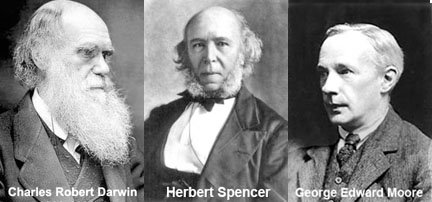
But, does it therefore follow that this predisposition necessarily dictates how we should behave? I believe that the answer to this question is no. More than that, I believe that to make the jump from the former to the latter is to commit a fundamental logical fallacy (indeed, it has a formal name - the "naturalistic fallacy"). It conflates statements about what "is" the case (i.e. what is "natural" behavior for us and our fellow primates) and what "ought" to be the case. This fallacy was pointed out a century ago, most forcefully by G. E. Moore, who pointed out that "is" statements cannot logically be made equivalent to "ought" statements.

This distinction is crucially important, and nowhere more so than in the application of evolutionary theory to human behavior. The economic and social movement known as "social darwinism" was fundamentally based on the "naturalistic fallacy," as exemplified by the words of the well-known English hymn, "All Things Bright And Beautiful," written by Cecil Frances Humphreys Alexander:

All things bright and beautiful,
All creatures great and small,
All things wise and wonderful:
The Lord God made them all.


All well and good, but here's the next verse:

The rich man in his castle,
The poor man at his gate,
God made them, high or lowly,
And ordered their estate.


(Interestingly, if you do a Google search for these particular lyrics, you will not find them. Apparently, the social darwinist overtones of the second verse do not sit well with modern audiences, including those in church.)

Alexander was most emphatically not a "social darwinist," yet the moral equation presented in his hymn is essentially equivalent to that of Herbert Spencer and the other social darwinists: that one's position in life (and, by implication, one's behavior) are determined by a force outside one's self (God or natural selection), and that all that remains for us is to "get with the program."

In a word: bullshit. That way lies the gas chambers at Auschwitz. No amount of science can tell us what we ought to do. At most, scientific knowledge can tell us how difficult (or easy) what we ought to do might be, but to conflate the two is to commit both a logical fallacy and monstrous evil. I sincerely hope that most evolutionary biologists will not agree with either the opinions of Marc Hauser or Franz De Waal on this subject, no matter how encouraging they may be. Long and hard experience has shown us that the "naturalistic fallacy" can be used to justify monstrous injustices (as has the belief in the authority of a "supernatural lawgiver," and for the same reason).

As adults, we must face up to the difficult responsibility of deciding what we "ought" to do, and then do it, no matter how easy or difficult. If it is the former (and if this is because of our evolutionary heritage), then perhaps the road ahead will not be as rocky as the one we have trod to get here. However, if it is the latter (and I suspect it may be, once again based on my understanding of our evolutionary heritage - more on this later), then that's just tough: but (to paraphrase Charles Darwin), one must do one's duty.

--Allen

To Whom Do We Owe Our Allegiance?


AUTHOR: Allen MacNeill

SOURCE: LewRockwell.com

COMMENTARY: Allen MacNeill

This isn't exactly "evolution-related," but I've got an essay up at LewRockwell.com, one of my favorite political websites. For those of you who haven't been there yet, LewRockwell.com is the most popular libertarian website on the Internet, and the third most popular political website overall. As the masthead proclaims, it's "anti-state, anti-war, and pro-free trade," and Lew describes himself as a "paleoconservative," to distinguish his brand of libertarian politics from the economically and morally bankrupt politics and policies of the "neocons." And, although I don't always agree with some of the viewpoints expressed by some of the commentators on his site, Lew has always acted like a gentleman and a scholar, and I agree so much with the political positions taken by him and his cohorts that I've decided that, if I'm going to dabble in politics at all (and I'd like to), I'll do it at LewRockwell.com. So, to save you all the effort of clicking over there, here is my first attempt at a libertarian political essay, mirrored in its entirety from LewRockwell.com:

To Whom Do We Owe Our Allegiance?

I pledge allegiance to the flag
of the United States of America
and to the republic for which it stands:
one nation indivisible,
with liberty and justice for all.
– Francis Bellamy (1892)

Our family has a flag. It's a variation of the flag of Robert the Bruce, king of Scotland. His was a red lion rampant on a field of gold. Ours is a golden lioness rampant on a field of purple. The problem is, to fly it correctly would require us to decide which flag should be flown higher - our family's flag or the star-spangled banner?

This is not a trivial problem. In fact, it goes to the heart of what is wrong with America today. To fly our family's flag correctly (even lawfully, in many jurisdictions), we should fly it in such a way as to make it clear to anyone seeing it that our family's flag - and therefore, by implication, our family - is subordinate to that of the United States government (and to the republic for which it stands). And therein lies the problem.

It is a basic tenet of libertarian conservatism that one's highest allegiance is to one's self and one's family. This principle is enshrined in the founding document of the United States of America. According to the Declaration of Independence, "[A]ll Men are created equal, [and] are endowed by their Creator with certain unalienable Rights, that among these are Life, Liberty and the Pursuit of Happiness -- That to secure these Rights, Governments are instituted among Men, deriving their just Powers from the Consent of the Governed, that whenever any Form of Government becomes destructive of these Ends, it is the Right of the People to alter or to abolish it, and to institute new Government, laying its Foundation on such Principles, and organizing its Powers in such Form, as to them shall seem most likely to effect their Safety and Happiness."

According to this viewpoint, individual people are sovereign entities, and governments are clearly subordinate to "the will of the people". Far from altering this relationship, the Constitution of the United States codifies these principles into law. It enumerates the very limited powers of the federal government, and then in the ninth and tenth amendments declares that "The enumeration in the Constitution of certain rights shall not be construed to deny or disparage others retained by the people" and "The powers not delegated to the United States by the Constitution, nor prohibited by it to the States, and reserved to the States respectively, or to the people."

What this means is that, except for the powers and responsibilities enumerated in the Constitution, the United States government has no power or sovereignty over the lives of its citizens. In brief, we own ourselves and the government is, at most, our servant.

Today, however, it is clear that to the government and an increasing number of the citizens of the United States this situation is reversed. The government believes (and, more importantly, acts as if) it owns us and we are its servants. This is why the symbolism of the flag is so important: the flag of the United States takes precedence over all others, including the flag of the family of Lyonesse. In other words, in the view of those who would presume to rule us, the president of the United States is our lord and sovereign and we are merely his vassals. He may take from us and from our families anything he desires: our land, our property, our children, even our very lives (via the death penalty and the military draft), and the only justification he needs to do this is the exercise of pure, naked, overwhelming force.

This is not the way it was supposed to be, friends. There was a time in America when the president viewed himself as a servant of the people and abjured all signs and symbols of sovereignty. Grover Cleveland refused to be treated any differently than ordinary citizens at state occasions and is remembered for vetoing a bill providing emergency relief to farmers following a natural disaster, on the grounds that to do so would legitimize the forcible taking of some citizen's money (via taxes) to benefit others. It may come as a surprise to some (especially today's Democrats, and most Republicans) that Cleveland was a Democrat...and moreover, by his behavior, a true democrat.

Now, however, the candidates from both parties freely and openly state their wholehearted support for a government and a presidency that clearly recognizes no restraint or challenge to its power except the use of violent force. Furthermore, the majority of the voting citizenry agrees, and supports those candidates for public office who most vigorously propound the doctrine of unlimited force.

For itself, the government asserts a sole monopoly on the use of force and recognizes no limits to its use. Every president since Lincoln has, in the context of war or the threat of war, justified the unilateral and unlimited use of military force and the suspension of individual sovereignty (in the context of the military draft) with sole reference to the supreme sovereignty of the president and the federal government. Nowhere in the Constitution nor any of its amendments is it stated or even implied that the States may not secede from the union, nor govern their own affairs, nor respect and protect the rights to private property of individual citizens. Yet ever since the administration of Lincoln, the federal government has unilaterally arrogated to itself all of these, and has enforced this usurpation through the use of deadly force.

In a world dominated by force alone, only force matters, and the only law is the law of force majeur: "might makes right". The founders of the American republic believed otherwise, and tried to structure the Constitution and the government it created so that there would be built-in limits to the unilateral use and abuse of power. They did so because they realized that a government founded on force, rather than the fully informed consent of the governed, is not a government at all. It is tyranny, pure and simple.

To our increasing sorrow, it is clear that tyranny is what we are rapidly approaching. To state the case succinctly, the recent history of the presidency, congress, the supreme court, many state governments, and both major political parties has been a history of repeated injuries and usurpations, all having in direct object the establishment of an absolute tyranny over the individual states and ourselves, the citizens of those states. Sound familiar?

But, if you've been paying attention recently, you already know most of this. The question is, what can we do about the accelerating slide toward tyranny? The first and most powerful thing we can do is to remember that crucial phrase in the Declaration: that governments, including ours, derive their just powers from the consent of the governed. So, as many did during the last election, we can withhold our consent: we can refuse to vote for those aspiring to be tyrants. We can also assert our personal and familial sovereignty over that of the tyrannical state by refusing to yield up to it that which it most desires: our land, our property, our children, and our lives.

In many cases, we can do this by simply ignoring Leviathan. Ever since George Bush stole the presidency in 2000, I've repeatedly found myself comforting my friends by pointing out to them that the party in power generally has little or no affect on our daily lives, especially out here in the hinterlands. So long as you pay as little taxes as you can legally get away with (yes, even the IRS has been forced repeatedly to admit that this is your constitutional prerogative), the dragon will pass you by, unseeing.

However, the time may come – indeed, it may soon be upon us – when the dragon will thirst for new blood. The wars in Afghanistan and Iraq (and Iran, and Syria, and North Korea, and – who knows – maybe northern Virginia) will necessitate the reinstatement of draft slavery. Then we must do what we did a generation ago, and the generation before that, and the generation before that, but this time in overwhelming numbers: we must march on Washington and speak truth to power. And that truth will be, as it was then, Hell no, we won't go!

And we can fly our families' flags: proudly, fearlessly, and freely, secure in the knowledge that there is where our highest and truest allegiance lies.

--Allen

Scientists Endorse Candidate Over Teaching of Evolution


AUTHOR: Cornelia Dean

SOURCE: New York Times

COMMENTARY: Allen MacNeill

In an unusual foray into electoral politics, 75 science professors at Case Western Reserve University in Cleveland have signed a letter endorsing a candidate for the Ohio Board of Education.

The professors’ favored candidate is Tom Sawyer, a former congressman and onetime mayor of Akron. They hope Mr. Sawyer, a Democrat, will oust Deborah Owens Fink, a leading advocate of curriculum standards that encourage students to challenge the theory of evolution.

Elsewhere in Ohio, scientists have also been campaigning for candidates who support the teaching of evolution and have recruited at least one biologist from out of state to help.

Lawrence M. Krauss, a physicist at Case Western Reserve who organized the circulation of the letter, said almost 90 percent of the science faculty on campus this semester had signed it. The signers are anthropologists, biologists, chemists, geologists, physicists and psychologists.

The letter says Dr. Owens Fink has “attempted to cast controversy on biological evolution in favor of an ill-defined notion called Intelligent Design that courts have ruled is religion, not science.”

In an interview, Dr. Krauss said, “This is not some group of fringe scientists or however they are being portrayed by the creationist community,” adding, “This is the entire scientific community, and I don’t know of any other precedent for almost the entire faculty at an institution” making such a statement.

But Dr. Owens Fink, a professor of marketing at the University of Akron, said the curriculum standards she supported did not advocate teaching intelligent design, an ideological cousin of creationism. Rather, she said, they urge students to subject evolution to critical analysis, something she said scientists should endorse. She said the idea that there was a scientific consensus on evolution was “laughable.”

Although researchers may argue about its details, the theory of evolution is the foundation for modern biology, and there is no credible scientific challenge to it as an explanation for the diversity and complexity of life on earth. In recent years, with creationist challenges to the teaching of evolution erupting in school districts around the country, groups like the National Academy of Sciences, perhaps the nation’s pre-eminent scientific organization, have repeatedly made this point.

But the academy’s opinion does not matter to Dr. Owens Fink, who said the letter was probably right to say she had dismissed it as “a group of so-called scientists.”

“I may have said that, yeah,” she said.

She would not describe her views of Darwin and his theory, saying, “This isn’t about my beliefs.”

School board elections in Ohio are nonpartisan, but Dr. Owens Fink said she was a registered Republican. Her opponent, Mr. Sawyer, was urged to run for the Seventh District Board of Education seat by a new organization, Help Ohio Public Education, founded by Dr. Krauss and his colleague Patricia Princehouse, a biologist and historian of science, and Steve Rissing, a biologist at Ohio State University.

At the group’s invitation, Kenneth R. Miller, a biologist at Brown University, will be in Ohio today through the weekend campaigning for other school board candidates who support the teaching of evolution. Dr. Miller, an author of a widely used biology textbook, was a crucial witness in the recent lawsuit in Dover, Pa., over intelligent design. The judge in that case ruled that it was a religious doctrine that had no place in a public school curriculum.

After that decision, Dr. Owens Fink said, the Ohio board abandoned curriculum standards that mandated a critical look at evolution, a decision she said she regretted. “Some people would rather just fold,” she said.

But Dr. Miller said it was a good call, adding, “We have to make sure these good choices get ratified at the ballot box.”

COMMENTARY:

Once again Ohio is the battleground in the ongoing culture wars. A similar change in the composition of a state board of education happened in Kansas earlier this year. It will be interesting to see what happens in Ohio, especially in the context of what many are beginning to perceive as a "glacial shift" in Ohio politics, away from religious conservatism and the Republican party and toward a more tolerant and pluralistic libertarianism, as exemplified by Tom Sawyer (even his name resonates in American cultural history). Whether the Democrats can finally become vertebrates and take a principled position on this and related issues remains to be seen...

--Allen

New Definitions of a "Gene"


AUTHOR: RPM

SOURCE: Evolgen

COMMENTARY: Allen MacNeill

RPM at Evolgen has a new post about evolving definitions of a "gene". Here are my thoughts on the subject:

For years I have been teaching my students that a gene is a segment of DNA that codes for a single RNA molecule with a complementary sequence, regardless of whether that RNA molecule is translated or not. This definition takes into account the genes for the various rRNAs and tRNAs, which are not translated, and also other forms of non-translated RNA that have recently been discovered. By this definition, genes that code for mRNAs that are actually translated are distinguished as "structural genes," using terminology that was first developed to describe the Jacob-Monod model of the lactose operon. Using this same terminology, the gene that codes for the lactose repressor protein is a "regulatory gene," insofar as the repressor does not function in an "extrinsic" biochemical pathway, but rather participates in the regulation of other structural genes.

However, the distinction between "structural" and "regulatory" genes outlined above is insufficient to describe the various kinds of genetically significant DNA sequences now known. For example, it does not include regions of the DNA to which protein regulators bind, but which are not themselves transcribed. It also does not distinguish between RNAs that are translated into proteins (either enzymes or repressor/regulator proteins) and those that are transcribed into RNA but never translated (such as rRNA, tRNA, and the newer non-translated RNAs).

Given the foregoing, it appears to me that there are four (possibly five) functionally different kinds of DNA coding sequences:

(1) translatable sequences: those DNA sequences that are both transcribed into mRNA and later translated into proteins, regardless of function (these can be further subdivided into proteins that participate in non-DNA related biochemical pathways and those that directly regulate DNA, but those seem to me to be classifications of the proteins, not the DNA sequences that code for them);

(2) transcribable sequences: those DNA sequences that are transcribed into RNA (i.e. rRNA, tRNA, etc.), but are not later translated into proteins/polypeptide chains. Again, what the RNAs do after being transcribed is not a function of the DNA, but rather of the RNAs, and therefore should not really be used to classify DNA coding sequences;

(3) binding sequences: those DNA sequences that are not transcribed into RNA nor translated into protein, but which function as binding sites for regulatory molecules such as repressor proteins, homeotic gene products, etc. While such sequences do not code for the production of a transcribed or translated gene product, they still participate in the regulation of other genes by serving as regulatory binding sites; and

(4) non-binding sequences: those DNA sequences that are not transcribed into RNA, not translated into protein, nor function as binding sites for regulatory moelcules. Such sequences would include highly repetitive sequences, tandom repeats, "spacer DNA", pseudogenes, retroviral and transposon inserts (both "dead" and potentially "alive"), etc. This latter category could be further subdivided into "functional" non-coding/non-binding DNA sequences versus "non-functional/parastitic" non-coding/non-binding DNA sequences, depending on whether they arise as part of the functional architecture of the DNA (primarily of eukaryotes), or whether they arise as side-effects of the action of parasitic genetic elements, such as retroviruses or transposons.

There may be other categories of DNA sequences that have other functions, but right now I can't think of any. Therefore, this is how I intend to teach the concept of a "gene" to my students at Cornell from now on.

So much for the Beadle/Tatum "one gene, one enzyme" model, eh? And the classical Mendelian definition of "one gene, one phenotypic trait" is no longer viable as well...

--Allen

Punctuated Equilibrium and the EEA for Human Behavioral Adaptations


AUTHOR: Christopher Ryan

SOURCE: Evolutionary Psychology

COMMENTARY: Allen MacNeill

The following question was asked on the Evolutionary Psychology list:

"...[W]e look to the EEA for the origins of the design of the human mind (modules, and so on) precisely because the structures in question change so slowly. If, on the other hand, it is demonstrated that complex physiological (and, presumably, psychological) structures can arise and disappear in as few as twenty generations, then of what relevance is the EEA to our discussions here?...Does Gould's punctuated equilibria theory integrate such rapid evolutionary change? And is it accepted by the folks working in [evolutionary psychology]? If so, why do we spend so much time discussing adaptations that have likely been replaced long ago?"

To which I replied:

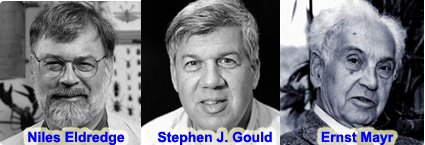
Eldredge and Gould, like the vast majority of other evolutionary biologists (beginning with Darwin and including such luminaries as Ernst Mayr) studied animals almost exclusively. It now appears that the equilibrium/stasis pattern that characterizes macroevolution in animals is at least partly an artifact of their developmental biology. Specifically, the hierarchical control of gene regulation in animals via homeotic genes makes possible surprisingly rapid phenotypic change without correspondingly large changes in genotype (i.e. the old "modern synthesis" has been superceded by the new "evo-devo").

Therefore, it is quite possible (indeed, likely) that relatively slight changes in genetic regulation of development have caused the remarkable changes in hominid phylogeny reflected in the fossil record. This has already been shown to be the case for the FOX-2-P gene, and just last month for the HAR-1-F gene (see "And the winner of the fastest gene award..."), slight changes in both of which have been correlated with significant changes in the human phenotype (both in the direction of greater neoteny, by the way).

So, it is quite possible that humans have changed significantly over the past 40,000 years, and perhaps not just via purely cultural means. It is still an open question just how much of our behavior is affected by our underlying genetics, and how quickly such relationships can change (and under what conditions). And, if new research in epigenetics is any indication, such changes may be even more common and rapid than has been heretofore suspected. Nutrition during early development, chronic stress (including chronic stress in utero), and exposure to certain environmental chemicals have all been implicated in altering gene regulation, and some such alterations have been shown to be heritable (shades of Lamarck!), thereby challenging further the "standard social science model" so vilified by Pinker and other EPers.

Therefore, the EEA for some current "modules" may not date to the Pleistocene, but rather to much later periods, including (but not limited to) events in historical times. Indeed, since relative reproductive success, rather than absolute numerical differences, is the basis for natural selection (and therefore adaptation), it may be that such seemingly cultural processes as warfare, migration (including forced migration via slavery), and religious practices involving both celibacy and increased procreation (via religious prohibition of contraception) may all have played significant roles in the shaping of the human behavioral phenotype via correlated alterations in the expression of genes affecting behavior.

In a nutshell, then, the answer is yes: since humans are animals (like those studied by Eldredge and Gould), it is quite possible that punctuated equilibrium theory is applicable to human evolution, including behavioral evolution, and that further investigations into the relationship between gene regulation, development, and human behavior may yield productive, testable hypotheses about such relationships.

At the risk of blowing my own horn, I have attempted to propose such a hypothesis for the evolution of the capacity for religious experience (see: "The Capacity for Religious Experience is an Evolutionary Adaptation to Warfare"):

"The pan-specific qualities of both religious experience and warfare indicate that they are both evolutionary adaptations. There is considerable variation between individuals with respect to their capacity for religious experience and motivation to participate in warfare. Selective advantages for participation in warfare accrue to both winners and losers as long as the benefits of participation exceed the average costs. These selective advantages, primarily in the form of differential reproductive success, accrue to males when they are on the winning side in a war, and often to females no matter which side they are on."

"Recent work on the evolutionary dynamics of religion have converged on a "standard model" in which religions and the supernatural entities which populate them are treated as epiphenomena of human cognitive processes dealing with the detection of and reaction to agents under conditions of stress, anxiety, and perceived threat. Religious experience at the individual level is characterized by depersonalization, coupled with submission to a super-individual force; the same is essentially the case for participation in warfare. The capacities for both religious experience and participation in warfare are adaptations insofar as they evolve by means of natural selection operating primarily at the level of individuals who are members of groups in which both kin selection and reciprocal altruism are also operative. It is likely that the overall patterns of supernatural organization exist as the result of coevolution between the memetic content of religious beliefs and the underlying neurological matrix within which such beliefs are maintained and transmitted in the context of specific ecological subsistence patterns."

--Allen