Punctuated Equilibrium and the EEA for Human Behavioral Adaptations


AUTHOR: Christopher Ryan

SOURCE: Evolutionary Psychology

COMMENTARY: Allen MacNeill

The following question was asked on the Evolutionary Psychology list:

"...[W]e look to the EEA for the origins of the design of the human mind (modules, and so on) precisely because the structures in question change so slowly. If, on the other hand, it is demonstrated that complex physiological (and, presumably, psychological) structures can arise and disappear in as few as twenty generations, then of what relevance is the EEA to our discussions here?...Does Gould's punctuated equilibria theory integrate such rapid evolutionary change? And is it accepted by the folks working in [evolutionary psychology]? If so, why do we spend so much time discussing adaptations that have likely been replaced long ago?"

To which I replied:

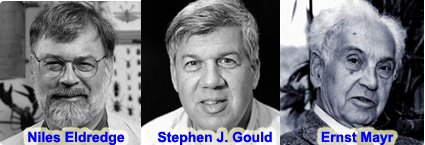
Eldredge and Gould, like the vast majority of other evolutionary biologists (beginning with Darwin and including such luminaries as Ernst Mayr) studied animals almost exclusively. It now appears that the equilibrium/stasis pattern that characterizes macroevolution in animals is at least partly an artifact of their developmental biology. Specifically, the hierarchical control of gene regulation in animals via homeotic genes makes possible surprisingly rapid phenotypic change without correspondingly large changes in genotype (i.e. the old "modern synthesis" has been superceded by the new "evo-devo").

Therefore, it is quite possible (indeed, likely) that relatively slight changes in genetic regulation of development have caused the remarkable changes in hominid phylogeny reflected in the fossil record. This has already been shown to be the case for the FOX-2-P gene, and just last month for the HAR-1-F gene (see "And the winner of the fastest gene award..."), slight changes in both of which have been correlated with significant changes in the human phenotype (both in the direction of greater neoteny, by the way).

So, it is quite possible that humans have changed significantly over the past 40,000 years, and perhaps not just via purely cultural means. It is still an open question just how much of our behavior is affected by our underlying genetics, and how quickly such relationships can change (and under what conditions). And, if new research in epigenetics is any indication, such changes may be even more common and rapid than has been heretofore suspected. Nutrition during early development, chronic stress (including chronic stress in utero), and exposure to certain environmental chemicals have all been implicated in altering gene regulation, and some such alterations have been shown to be heritable (shades of Lamarck!), thereby challenging further the "standard social science model" so vilified by Pinker and other EPers.

Therefore, the EEA for some current "modules" may not date to the Pleistocene, but rather to much later periods, including (but not limited to) events in historical times. Indeed, since relative reproductive success, rather than absolute numerical differences, is the basis for natural selection (and therefore adaptation), it may be that such seemingly cultural processes as warfare, migration (including forced migration via slavery), and religious practices involving both celibacy and increased procreation (via religious prohibition of contraception) may all have played significant roles in the shaping of the human behavioral phenotype via correlated alterations in the expression of genes affecting behavior.

In a nutshell, then, the answer is yes: since humans are animals (like those studied by Eldredge and Gould), it is quite possible that punctuated equilibrium theory is applicable to human evolution, including behavioral evolution, and that further investigations into the relationship between gene regulation, development, and human behavior may yield productive, testable hypotheses about such relationships.

At the risk of blowing my own horn, I have attempted to propose such a hypothesis for the evolution of the capacity for religious experience (see: "The Capacity for Religious Experience is an Evolutionary Adaptation to Warfare"):

"The pan-specific qualities of both religious experience and warfare indicate that they are both evolutionary adaptations. There is considerable variation between individuals with respect to their capacity for religious experience and motivation to participate in warfare. Selective advantages for participation in warfare accrue to both winners and losers as long as the benefits of participation exceed the average costs. These selective advantages, primarily in the form of differential reproductive success, accrue to males when they are on the winning side in a war, and often to females no matter which side they are on."

"Recent work on the evolutionary dynamics of religion have converged on a "standard model" in which religions and the supernatural entities which populate them are treated as epiphenomena of human cognitive processes dealing with the detection of and reaction to agents under conditions of stress, anxiety, and perceived threat. Religious experience at the individual level is characterized by depersonalization, coupled with submission to a super-individual force; the same is essentially the case for participation in warfare. The capacities for both religious experience and participation in warfare are adaptations insofar as they evolve by means of natural selection operating primarily at the level of individuals who are members of groups in which both kin selection and reciprocal altruism are also operative. It is likely that the overall patterns of supernatural organization exist as the result of coevolution between the memetic content of religious beliefs and the underlying neurological matrix within which such beliefs are maintained and transmitted in the context of specific ecological subsistence patterns."

--Allen
On the Detection of Agency and Intentionality in Nature


AUTHOR: Elena Broaddus

SOURCE: Evolution and Design

COMMENTARY: Allen MacNeill

First, many thanks to the faithful readers who have also continued to pay attention to the Evolution and Design website (the weblog of the "notorious Cornell evolution and design seminar" and the contents contained therein. I am particularly pleased that the hard work and careful thought of the students whose papers have been posted has been recognized, and even moreso that they have been given the highest praise possible: that is, critical analysis.

I would like to draw some more attention to E. Broaddus paper on the “innate” tendency to infer purpose in nature. I have long suspected that humans (and perhaps many vertebrates, especially mammals) have this tendency. As an evolutionary psychologist, I at least partially subscribe to the idea that the human mind is composed primarily of “modules” whose functions are to process particular kinds of sensory information in such a way as to yield adaptive responses to complex environmental information. This is precisely what Broaddus argues for in her paper: that the human mind (and, by extension, the vertebrate “mind” in general) has a module that is adapted specifically for the precise and rapid inference of intentionality in nature. That such an “agency detector” (to use the commonly accepted term for such a module) would have immense adaptive value is obvious. In an environment in which other entities do indeed have “intentions” (i.e. predators, competitors, potential mates, etc.), the ability to detect and infer the possible consequences of acting upon such intentions would confer immense adaptive value on any organism with such an ability.

Furthermore, as Broaddus points out (and as we discussed briefly in the seminar), to be most effective such a detector should be tuned in such a way as to detect virtually all such “intention-indicating” behaviors. This would have the effect of producing a significant number of “false positives,” as any detector that is tuned high enough to detect all actual cases would have such a side-effect.

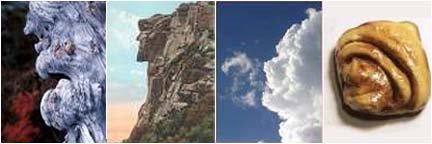
As Broaddus points out, one of the side-effects of such an “agency detector” would be the detection of intentionality in entities that clearly had no such intentions. If, for example, one of the most important functions of such a detector in humans is to quickly “read” and assess the intentions betrayed in human facial expressions, then it would almost certainly detect human facial expressions in objects in the environment that clearly do not have such expressions, such as rocks, foliage, water stains, etc. This would explain the ability of many humans to “see” human facial expressions in such things as water stains, cinnamon buns, rocks, etc.

Clearly, there are some “natural objects” that do, indeed, have human facial expressions impressed upon them: the faces of the presidents at Mount Rushmore are an example cited ad nauseam by ID theorists. However, I am much more interested in “faces” that humans detect in rocks and other environmental objects that are clearly not produced by human agency. Indeed, the faces at Mount Rushmore constitute a kind of “control” for this ability, as they are clearly the result of intentionality, and therefore can be used to anchor that end of the “agency detection” spectrum (at the other end of which are things like “faces” in clouds, tree foliage, etc.). Somewhere in this spectrum is a cross-over point at which actual intentionality/agency disappears and facticious intentionality/agency takes over. It is the location of that cross-over point that constitutes the hinge of the argument between evolutionary biologists and ID theorists.

Broaddus’s analysis of autism as a possible example of malfunctioning “agency detection” is, IMO, brilliant, and presents an immediately testable hypothesis: that autistic children lack well-tuned “agency detectors,” and that this at least partially explains their well-known indifference to intentional agents, such as other people (including their parents), animals, etc. In people with both full-blown autism and the milder Asperger’s syndrome (sometimes called Aspies”), a common attribute is an impaired ability to infer intentionality (or, in many cases, the mere existence of other minds) on the part of autistics and Aspies. As Broaddus points out, there are clear anatomical and functional differences between autistics, Aspies, and non-impaired people, and that these differences may be correlated with the etiology of these conditions. For example, it is very interesting that there appears to be more (rather than less) neurons in the brains of autistics than in non-impaired people.

This lends credence to the generally accepted hypothesis that the information processing “modules” proposed by evolutionary psychologists are the result of “pared down” neural networks that are speciallized for particular cognitive tasks. Clearly, the agency/intentionality detector in humans functions extremely well and, as the parlance goes, “in the background.” We are rarely conscious of its operation, despite the fact that it is virtually always “on.” This explains, for example, something I first noticed as a young child: that no matter how much I tried, I couldn’t NOT see faces in the patterns in the linoleum on the floor of my grandmother’s kitchen, in the foliage of trees, in rocks, and in photographs of billowing smoke, splashing water, etc. The agency/intentionality detector works extremely efficiently in people of all ages, but especially in children. Indeed, as Broaddus points out, part of becoming an adult consists in learning (usually by trial-and-error) which of the seemingly intentional entities which we perceive all the time actually are intentional agents and actually have intentions vis-a vis ourselves. We must learn, in other words, to critically analyze the constant stream of “positive” agency/intentionality detection events, and discriminate between those that affect us and those that do not. It may be that this discrimination process actually involves the neurological “re-wiring” of the parts of the sensory/nervous system that produces such detection events, and this might explain, at least in part, the decreased ability of adults to believe in the existence of intentional agents in the natural environment.

Broaddus not only presents a cogent hypothesis concerning the existence of such an agency/intentionality detector/module in humans, she proposes several possible ways of testing whether or not such a detector actually exists, and to “map” its dimensions, capabilities, biases, and limitations. I believe that this opens up a very fruitful area of empirical research into such detectors, and can ultimately lead to much more clarity about an issue that so far has generated much more heat than light. I hope that her ideas and suggestions will be followed up by others (I certainly intend to do so), and that further empirical research into this fascinating and little-known capability will add to our understanding of what makes us the peculiar creatures we are.

Follow-up Post on Analogies in Science

In comment # 20 in a thread at http://specifiedcomplexity.freehostia.com/?p=232, PvM said:

"ID relies on the concept of analogy to infer design. Science does the hard work to provide mechanisms, pathways and provides analyses of the data to support their conclusions. That’s the big difference. How do we know an analogy really exists?"


This was precisely my point in my blogpost on identity and analogy (see http://evolutionlist.blogspot.com/2006/06/identity-analogy-and-logical-argument.html)
For example, do we have any objective way to determine if one rock is analogous with another? Or whether an anatomical feature (or a protein/substrate binding site) is analogous to another? As in the case of telology, we think we can do this very easily (just as we can easily identify what looks like design), but I would argue that this is because both "finding" analogies and "finding" design/purpose are capabilities of the human mind/nervous system that have conferred enormous adaptive value on our ancestors. As in the case of our putative innate "agency/design/purpose detector" (which first becomes active in very early infancy), our "analogy detector" also appears to become active at a very early age, and operates entirely "in the background." That is to say, we are almost totally unaware of its operation, and concentrate only on its output.

Our ability to detect (and construct) analogies is probably the core of our "intelligence," as demonstrated by the fact that identifying analogies has been traditionally used as one of the most sensitive guages of general intelligence (i.e. "g") in intelligence tests (such as the Miller Analogies Test). As more than one participant in this thread has pointed out (Sal, I think you were first), doing mathematics is essentially the construction of highly compact analogies, in which numerical (and sometimes physical) relationships are expressed as abstract symbols.

Interestingly, in the case of some analogies in biological systems we have an independent double-check on our identification of analogous things. This is based on the evolutionary concept of homology, or derivation from a common ancestor. If two structures on two different organisms (say a small bone of the jaw of a reptile and the even smaller bone in the middle ear of a mammal) appear to be analogous (on the basis of size, location, relationship to other bones, etc.) there are at least two different, though related, methods of verifying that these structures are indeed analogous (and not just accidentally similar). One way is by means of comparative paleoanatomy, in which a series of fossils of known age are compared to determine if there is a connection between the evolutionary pathways of derivation of the structures. If such a pathway can be empirically shown to exist, this would be strong evidence for both the analogous and homologous nature of the objects. Alternatively one could compare the nucleotide sequences that code for the structures to determine if they are sufficiently similar to warrant a conclusion of homologous derivation. In both cases, evidence for homology, combined with our intuitive "identification" of analogous structure and/or function, both point to the same conclusion: that the two structures are both analogous and homologous.

BTW, this is why structures that appear to be analogous, but for which there is no convincing evidence of homology (as in the wings of birds and insects) can present a serious problem to evolutionary biologists, and especially systematists/taxonomists and those engaged in cladistic analysis. Such apparent similarities (technically called homoplasies) can either be the result of "true" (i.e. partial) analogy at the functional (and/or structural) level (and therefore assumed to be the result of convergent evolution) or they can be completely accidental. Simple inspection can be insufficient to separate these two hypotheses, and lacking either fossil or genomic evidence, conclusions about actual analogy can be extremely difficult to draw. However, if there is fossil and/or genomic evidence and it points away from homology (i.e. descent from a common ancestor), then the structures can be considered to be analogous but not homologous.

In the same comment, PvM also wrote:

"I also think that Sal is overusing the concept of analogy to mean almost anything."


Indeed, it is essential in discussions such as these that we be as precise as possible about our definitions, as imprecision can only lead to confusion (at best) and unsupportable conclusions (at worst). Perhaps the most essential distinction to be made in this regard is between "anaologies of description" (which could also be called "semantic analogies") and "analogies of function/structure" (which could also be called "natural analogies"). The former (i.e. "semantic analogies") are merely artifacts of the structure of human cognition and language, as happens whenever we describe an analogy that we have perceived. By contrast, the latter (i.e. "natural analogies") are the actual similarities in function/structure that we are describing (i.e. that resulted in our identification and description in the first place). As in the Zen koan about the roshi and the novice in the moonlit garden, much of the confusion about which of the two types of analogies we are discussing seems to stem from confusion between the moon that illuminates the garden and the finger pointing at the moon.

Update on the Cornell Evolution and Design Seminar

Things have been developing in rather interesting ways in the Cornell "Evolution and Design" seminar. We have worked our way through all of the articles/papers and books in our required reading list, along with several in the recommended list. Before I summarize our "findings", let me point out that for most of the summer our seminar has consisted almost entirely of registered students (all but one undergrads, with one employee taking the course for credit), plus invited guests (Hannah Maxson and Rabia Malik of the Cornell IDEA Club). Two other faculty members (Warren Alman and Will Provine) attended for a while, but stopped in the middle of the second week, leaving me as the only faculty member still attending (not all that surprising, as it is my course after all - however, at this point I view my job mostly as facilitator, rather than teacher).

Anyway, here is how we've evaluated the books and articles/papers we've been "deconstructing":

Dawkins/The Blind Watchmaker: The "Weasel" example is unconvincing, and parts of the book are somewhat polemical, by which we mean substituting assertion, arguments by analogy, arguments from authority, and various other forms of non-logical argument for legitimate logical argument (i.e. based on presentation and evaluation of evidence, especially empirical evidence). Dawkins' argument for non-telological adaptation (the "as if designed" argument), although intriguing, seems mostly to be supported by assertion and abstract models, rather than by empirical evidence.

Behe/Darwin's Black Box: The argument for "irreducible complexity", while interesting, appears to leave almost all of evolutionary biology untouched. Behe's argument is essentially focused on the origin of life from abiotic materials, and arguments for the "irreducible complexity" of the genetic code and a small number of biochemical pathways and processes. Therefore, generalizing his conclusions to all of evolutionary biology (and particularly to descent with modification from common ancestors, which he clearly agrees is "strongly supported by the evidence") is not logically warranted. Attempts to make such extensions are therefore merely polemics, rather than arguments supported by evidence.

Dembski/The Design Inference and "Specification: The Pattern that Signifies Intelligence": Dembski's mathematical models are intriguing, especially his recent updating of the mathematical derivation of chi, his measure for "design" in complex, specified systems. However, it is not clear if empirical evidence (i.e. counted or measured quantities) can actually be plugged into the equation to yield an unambiguous value for chi, nor is it clear what value for chi would unambiguously allow for "design detection." Dembski suggests chi equal to or greater than one, but we agreed that it would make more sense to use repeated tests, using actual designed and undesigned systems, to derive an empirically based value for chi, which could then be used to identify candidates for "design" in nature. If, as some have suggested, plugging empirically derived measurements into Dembski's formula for chi is problematic, then his equation, however interesting, carries no real epistemic weight (i.e. no more than Dawkin's "Weasel", as noted above).

Johnson/The Wedge of Truth: To my surprise, both the ID supporters and critics in the class almost immediately agreed that Johnson's book was simply a polemic, with no real intellectual (and certainly no scientific) merit. His resort to ad hominem arguments, guilt by association, and the drawing of spurious connections via arguments by analogy were universally agreed to be "outside the bounds of this course" (and to exceed in some cases Dawkins' use of similar tactics), and we simply dropped any further consideration of it as unproductive. Indeed, one ID supporter stated quite clearly that "this book isn't ID", and that the kinds of assertions and polemics that Johnson makes could damage the credibility of ID as a scientific enterprise in the long run.

Ruse/Darwin and Design (plus papers on teleology in biology by Ayala, Mayr, and Nagel): Both ID supporters and evolution supporters quickly agreed that all of these authors make a convincing case for the legitimacy of inferring teleology (or what Mayr and others call “teleonomy”) in evolutionary adaptations. That is, adaptations can legitimately be said to have “functions,” and that the genomes of organisms constitute “designs” for their actualization, which is accomplished via organisms' developmental biology interacting with their environments.

Moreover, we were able to come to some agreement that there are essentially two different types of “design”:

Pre-existing design, in which the design for an object/process is formulated prior to the actualization of that object/process (as exemplified by Mozart’s composing of his final requiem mass); note that this corresponds to a certain extent with what ID supporters are now calling “front-loaded design”, and

Emergent design, in which the design for an object/process arises out of a natural process similar to that by which the actualization takes place (as exemplified by Mayr’s “teleonomy”).

In addition, the ID supporters in the seminar class agreed that “emergent design” is not the kind of design they believe ID is about, as it is clearly a product of natural selection. A discussion of “pre-existing design” then ensued, going long past our scheduled closing time without resolution. We will return to a discussion of it for our last two meetings next week.

As we did not use the two days scheduled for “deconstruction” of Johnson’s Wedge of Truth, we opened the floor to members of the class to present rough drafts/outlines of their research papers for the course. It is interesting to note that both papers so presented concerned non-Western/non-Christian concepts of “design” (one focusing on Hindu/Indian and Chinese concepts of teleology in nature, and the other on Buddhist concepts of design and naturalistic causation).

Overall, the discussion taking place in our seminar classes has been both respectful and very spirited, as we tussle with difficult ideas and arguments. For my part, I have come to a much more nuanced perception of both sides of this issue, and to a much greater appreciation of the difficulties involved with coming to conclusions on what is clearly one of the core issues in all of philosophy. And, I believe we have all come to appreciate each other and our commitments to fair and logical argument, despite our differences…and even to have become friends in the process. What more could one ask for in a summer session seminar?

D'Arcy Thompson and "Front-Loaded" Intelligent Design


AUTHOR: Salvador Cordova

SOURCE: Marsupials and placentals: A case of front-loaded, pre-programmed, designed evolution?

COMMENTARY: Allen MacNeill

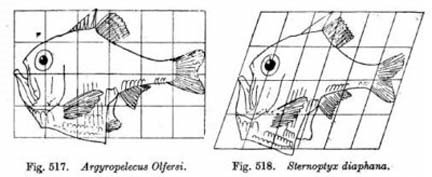
The concept of "front-loading" as described in Salvador Cordova's post at Telic Thoughts bears a remarkable resemblance to the ideas of the Scottish biomathematician D'Arcy Thompson (1860-1948). In his magnum opus, Growth and Form, Thompson proposed that biologists had over-emphasized evolution (and especially natural selection) and under-emphasized the constraints and parameters within which organisms develop, constraints that "channel" animal forms into particular patterns that are repeated over and over again across the phyla.

However, while Thompson's ideas strongly imply that there is a kind of teleology operating at several levels in biology (especially developmental biology), Thompson himself did not present hypotheses that were empirically testable (sound familiar?):

Thompson did not articulate his insights in the form of experimental hypotheses that can be tested. Thompson was aware of this, saying that 'This book of mine has little need of preface, for indeed it is 'all preface' from beginning to end.'

Thompson's huge book (over 1,000 heavily illustrated pages) is a veritable gold mine of ideas along the lines articulated in Sal's post. However, Thompson's underlying thesis is just as inimical to ID as is the explanation from evolutionary biology. His argument is essentially that biological form is constrained by the kind of mathematical relationships that characterize classical physics. That is, there are "built-in" laws of form that constrain the forms that biological organisms can take. And therefore, physical law provides the “front-loading”, not a supernatural “intelligent designer.”

For example, Thompson pointed out that the shape that droplets of viscous liquid take when dropped into water are virtually identical to the medusa forms of jellyfish, and that this "convergence of form" is therefore not accidental. Rather, it is fundamentally constrained by the physics of moving fluids, as described in the equations of fluid mechanics. Thompson's book is filled with similar examples, all pointing to the same conclusion: that biological form is constrained by the laws of physics (especially classical mechanics).

Evolutionary convergence, far from departing from Thompson's ideas, is based on essentially the same kinds of constraints. Sharks, dolphins (the fish, not the mammals), tunas, ichthyosaurs, and porpoises all appear superficially similar (despite significant anatomical differences) because their external shapes are constrained by the fluid medium through which they swim. In the language of natural selection, any ancestor of a shark, dolphin, tuna, ichthyosaur, or porpoise that (through its developmental biology) could take the shape of a torpedo could move more efficiently through the water than one that had a different (i.e. less efficient) shape, and therefore would have a selective advantage that would, over time, result in similar shapes among its proliferating ancestors. The same concept is applied to the parallel evolution of marsupial and placental mammals: similar environments and subsistence patterns place similar selective constraints on marsupial and placental mammals in different locations, resulting in strikingly similar anatomical and physiological adaptations, despite relatively non-homologous ancestry.

This evolutionary argument is now being strongly supported by findings in the field of evolutionary development ("evo-devo"), in which arguments based on "deep homology" are providing explanations for at least some of the seemingly amazing convergences we see in widely separated groups of organisms. Recent discoveries about gene regulation via hierarchical sets of regulatory genes indicate that these genes have been conserved through deep evolutionary time, from the first bilaterally symmetric metazoans to the latest placental mammals, as shown by their relative positions in the genome and relatively invariant nucleotide sequences. These genes channel the arrangement of overall anatomy and body form throughout the course of development, producing the overall shapes of organisms and the relationships between body parts that we refer to when discussing evolutionary convergence.

However, as should be obvious by now, this in no way provides evidence for the currently popular ID hypothesis of “front-loading”, except insofar that it states that the hierarchical control of overall development evolved very early among the metazoa. It provides no empirically testable way to distinguish between an evolutionary explanation and a “design” explanation. Indeed, all of the evidence to date could be explained using either theory.

And so, by the rules of empirical science, since the evolutionary explanation is both sufficient to explain the phenomena and does not require causes that are outside of nature (i.e. a supernatural designer, that is neither itself natural nor works through natural – i.e. material and efficient – causes), evolutionary biologists are fully justified in accepting the evolutionary explanation (and disregarding the “front-loaded ID” explanation.

Only in the case that the kinds of natural causes described above (especially the ability of evo-devo processes to constrain the development of overall form via purely natural means via the known biochemistry of development) can NOT explain the patterns we observe in convergent evolution should we entertain other hypotheses (especially if those other hypotheses are not empirically testable). Only then, and not before…and therefore certainly not now.

FOR FURTHER READING:

For more on Thompson and his work, see:
http://www.google.com/search?hl=en&q=D%27Arcy+Thompson&btnG=Google+Search
and especially:
http://www-history.mcs.st-andrews.ac.uk/Mathematicians/Thompson_D'Arcy.html
and follow the links at:
http://en.wikipedia.org/wiki/D'Arcy_Thompson

Also, a thread that included a discussion of Thompson's work has already appeared at Telic Thoughts http://telicthoughts.com/?p=763

--Allen

Doggies are Better than Weasels


AUTHOR: Dave Thomas

SOURCE: Target? We don't need no stinking target!

COMMENTARY: Allen MacNeill

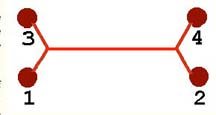
Over at The Panda’s Thumb, Dave Thomas has posted the results of another computer simulation of natural selection, this time applied to the classical “Traveling Salesman” problem. No, that isn’t the lead-in to an old dirty joke, it’s a classical problem in optimization. The basic idea is to calculate the shortest possible route for a traveling salesman to follow when visiting more than three cities (i.e. sales territories). Clearly, when there are only two cities, the solution is obvious to anyone with a knowledge of Euclidian geometry: a straight line connecting the two cities. However, as more cities are added, the number of possible solutions expands exponentially, making calculations of optimal pathways extraordinarily difficult.

This is where Dave Thomas (and a dish of soap bubbles) comes in. In his post, Thomas first shows the classical solution to a five-node traveling salesman problem (TSP), as demonstrated by the Swiss mathematician Jakob Steiner. He then illustrates the optimal solution using a soap film generator, which uses free-standing posts and soap films to generate the optimal solution.

Thomas then goes on to formulate a “solution engine” for higher-level Steiner problems (i.e with more than five asymmetrically placed nodes), using natural selection operating on a computer-generated “TSP solver.” The results are truly astonishing: although the theoretical number of possible solutions is fantastically large, the TSP solver using simple natural selection (call it the NS_TSPS) found several optimal solutions with amazing speed. The same thing happened when Thomas tested the computer-generated solutions using soap films. Indeed, he was able to show that the NS_TSPS was actually more efficient at finding solutions than the soap film generator, a result that surprised him (and most of the commentators on the Thumb). One of the soap-film solutions took the shape of a “doggie,” a solution that the NS_TSPS didn’t find. Thomas was able to show that, although the soap-film solution was stable, it was actually sub-optimal to an alternative solution generated by the NS_TSPS (hence the title of this post)

Why is all of this important, in the context of the ongoing debate over design in nature, as exemplified by Richard Dawkins' book The Blind Watchmaker? Because, unlike Dawkins’ WEASEL program, which used a pre-specified “target,” thereby opening his model to accusations that it simply “found” a pre-specified outcome (and was therefore actually an example of “intelligent design”), the NS_TSPS had no pre-specified solution at all, and found the optimal solutions the same way natural selection “finds” them in the wild: by simple trial and error, combined with preservation of partially successful outcomes.

In other words, the objections that some of us had to Dawkins’ WEASEL program have been addressed in Thomas’ NS_TSPS, and natural selection has been shown once again to be all that is necessary to “find” an optimal solution to a “problem,” even in the absence of a pre-specified outcome.

This is important to the ongoing discussion about design in nature for several reasons:

• It decisively undercuts the objections commonly voiced by advocates of ID, that all simulations of natural selection are actually simulating ID, as they all include pre-specified “target” outcomes.

• It shows the extraordinary (and somewhat counterintuitive) power of natural selection to “find” adaptive optima, even in the absence of pre-specified solutions.

• It reinforces a finding that has increasingly been coming out of research into computerized “genetic algorithms”: that selection processes that incorporate non-directed natural selection can find solutions to problems that are highly resistent to more “classical” targeted computation.

• It demonstrates that the common assertion by ID theorists that ID theory is logically necessary as an alternative to evolutionary theory, since the latter has failed to demonstrate empirically that it can solve such optimization problems in real time, is empirically false. That is, ID theory isn’t necessary to explain adaptation, even in cases where the computation of adaptive optima appears to be beyond the capability of any real-time computing system.

And this, in turn, emphasizes the point that I have made in several other posts to this blog: that rather than ID theory being a logically necessary alternative to evolutionary theory, it is a logically unnecessary addition to standard evolutionary theory, and one that furthermore is not supported by the empirical evidence.

FOR FURTHER READING:

There are other simulations of evolution by natural selection that are immune to the common objections voiced by ID theorists. To learn more about the most powerful one developed to date, check out Avida.

--Allen

Inference and the Boundaries of Science


AUTHOR: Hannah Maxson

SOURCE: Evolution and Design

COMMENTARY: Allen MacNeill

The now-notorious Cornell "evolution and design seminar" met for the first time last night, and in my opinion our first meeting was a rousing success. As I had hoped, the participants began to make their opinions and positions known (despite my blathering), and a good time was had by all. We're getting ready to analyze Richard Dawkins' arguments in The Blind Watchmaker, discussion of which will be facilitated by Will Provine (one of our faculty participants).For a brief taste of how things went last night, you should check out the course blog. Here's a sample:

Hannah Maxson (founder of the Cornell IDEA Club) wrote:

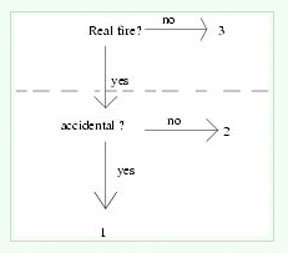
In class last night Allen went over inference and his views of the boundaries of science. He gave us the example of an individual coming upon the remains of what appeared to have been a house fire in the past. Without any prior knowledge of the event or eyewitnesses to question, one might infer any of three things (see diagram, above):

1) accidental house fire
2) arson: purposeful house fire
3) no fire at all; setup job (for film, etc.)

A tentative explanatory filter with which to distinguish between those three causes. But he suggested there is a problem from the very beginning. The first question– was this a real fire, or a setup job? can never be definitely answered. Considering a very powerful film crew, for instance, the setup would look almost like a real fire. Extrapolating slightly, given an omnipotent “designer”, could the scene not be exactly the same as what one would expect from a housefire?

Because there is no way of giving a definite answer based on empirical evidence– to which we, as scientists, are limited– we must throw out that whole node on our explanatory filter. Everything above the dotted line, at least, is outside our realm of knowledge.

I had a quarrel with much of this reasoning, though to begin with I ought to make a strong disclaimer that I’m not at all interested in defending “setup jobs”– I think they are highly uninteresting, for one thing, and not worth spending time in. But a “right” or at least convenient answer doesn’t make the logic that goes into an argument sound.

First, can we throw a question out of the realm of science because we will never be able to get a definite answer? Scarcely anything in science will ever be proved or disproved. In general, we don’t look for certain proofs, but simply for empirical evidence that might favor one or the other, so that we can make an inference to the best explanation. If the evidence is not clear, we often make choices based on conventions, such as parsimony.

If we cannot throw it out for lack of a definite answer, can we at least throw out that node for lack of empirical evidence either way? It is true that if the scene was designed (omnipotently) so that there was absolutely no evidence there had been no real fire, science could do nothing with the question. But we cannot assume a priori that all “setup jobs” have no emperical evidence available; there are a great many other possibilities besides an omnipotent designer who works to make things exactly the same. Consider, for example Einstein’s view: “Nature hides her secrets because of her essential loftiness, but not by means of ruse.”; or in another remark: “God is slick, but he ain’t mean.”

So while we can do away with a “absolutely perfect imitation” possibility as an option that could never have any emperical grounds, that is not justification for demarcating the entire first node out of our field of inquiry. In any research project you learn quickly that things are not always as they first appear. What seems on first analysis to be the remains of a fire may turn out on further investigation to hold evidence of a set-up job. What appears to have been designed may in fact be the product of chance and necessity, and what we are used to thinking of as the products of unguided evolution may contain evidence of purposeful design.

Refusing to consider questions is never good practice; we may reject explanations for lack of warrant, but ought never reject the investigation a priori.


To which I replied:

Thanks, Hannah, for the diagram (it’s clearer than mine was last night) and for your analysis, above. However, I still stand by my position that, given a sufficiently powerful “designer,” a house fire (or anything else) can be simulated to such a degree (as Warren [Warren Allman, director of the Paleontological Research Institute and Museum of the Earth here in Ithaca] said, “right down to the subatomic particles) that there would be absolutely no way to distinguish between such a creation ex nihilo and the real thing.

That is, no amount of empirical evidence could make it possible to get past the first branch point in the explanatory filter in the diagram. Indeed, every piece of empirical evidence one could add would simply amplify one’s assertion of the hypothesis of the Designer’s omnipotence (”Amazing, S/He/It can f/make things right down to the quarks!”). For this reason, rather than agonize over our inability to get past the first branch point in the filter via empirical means, we simply agree to skip that step and move down to the second branch point.

I believe that this “agreement” is something with which most ID supporters would concur, as it gets us out of an empirically insoluble dilemma, and moves us along to the question of accident vs design. Darwin did essentially the same thing in the Origin of Species, by bringing in “the Creator” only at the very end, and by relegating Her/Him/It to setting the whole system in motion in the beginning. Having spent many years reading Darwin’s personal writings (correspondence mostly, but also some of the expurgated sections of his autobiography), it appears to me that Darwin became a Deist about the time he wrote the Origin (or in the process of doing so, which took two decades), but then slowly realized that Deism is essentially equivalent to agnosticism/atheism, as the Deity of Deism plays no part in the actual universe at all, beyond setting up the natural laws that govern it. I find myself in the same situation: assuming that the Deity of Deism exists gets one absolutely nowhere at all in science, and so (like most other scientists), I simply don’t go there anymore.


And now I would go further; while it is a good idea to "not reject explanations for lack of warrant, bu never reject the investigation a priori", the point I was trying to make in my reply was that if one can't get by the first branch point in the "explanatory filter" I posited during the discussion, then we can't really do science at all. Furthermore, agreeing that the remains of what looks like a house fire could have been created ex nihilo by a sufficiently powerful entity gets us absolutely nowhere in terms of explaining the origin of the wreckage. In fact, it forestalls the possibility of any kind of empirically verifiable (or falsifiable) hypothesis, and is therefore a "science stopper" of the first order.

--Allen